

 Industrial Water Plant


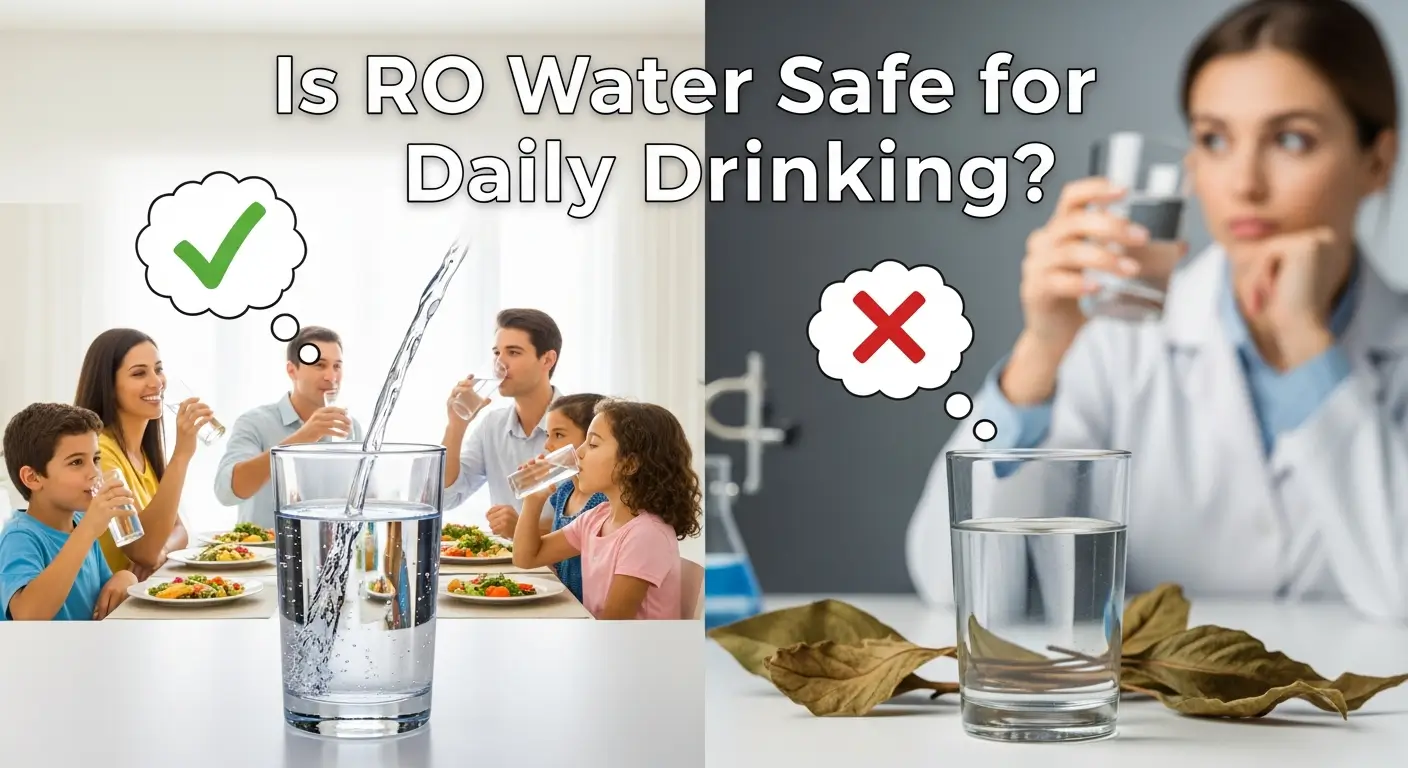
Is RO Water Safe for Daily Drinking? A Practical, Science-Backed Guide (2026)

Why This Question Matters More Than Ever
Quick Answer: Yes, RO water is safe for daily drinking. When you use a properly maintained RO system, the water you drink is clean, pure, and healthy for everyday use.
Now, let me explain why people get confused about this topic.
Every day, I get calls and messages from worried customers. They’ve read something online that scared them. One article says RO water is the safest option. Another claims it’s dangerous because it removes minerals. AI tools give different answers. Reddit threads are full of conflicting opinions.
I understand the confusion. After 15 years of installing and servicing water purifiers across Bangladesh, I’ve heard every concern imaginable. Parents worry about their children. Elderly people ask if RO will affect their health. Young professionals want to know if they’re making the right choice.
Here’s what I know from real experience: the safety of your drinking water depends on what’s in it, not what’s missing from it. And in most parts of Bangladesh, what’s IN the water is the real problem.
Let me walk you through the facts. No fear-mongering. No sales pitch. Just honest, practical information based on science and experience.
What Is RO Water, Exactly? (Quick Refresher)
RO stands for Reverse Osmosis. It sounds technical, but the concept is simple.
How It Works:
Imagine pushing water through a super-fine filter. This filter has tiny holes—so tiny that only water molecules can pass through. Everything else gets left behind. Contaminants, dissolved salts, bacteria, viruses—they all get blocked.
Here’s a simple way to think about it:
- Regular water filters are like a kitchen strainer. They catch big stuff.
- RO membranes are like a coffee filter for molecules. They catch almost everything.
What RO Removes That Other Filters Cannot:
| Contaminant Type | Regular Filter | RO System |
| Dust & sediment | ✓ | ✓ |
| Chlorine | ✓ | ✓ |
| Bacteria | Sometimes | ✓ |
| Viruses | Rarely | ✓ |
| Arsenic | ✗ | ✓ |
| Lead | ✗ | ✓ |
| Dissolved salts | ✗ | ✓ |
| Pesticides | ✗ | ✓ |
The Difference Between RO Water and Normal Filtered Water:
Normal filtered water still contains dissolved impurities. You can’t see them, but they’re there. RO water has had these removed. That’s why RO water often tastes different—cleaner, lighter, sometimes “flat.”
If you want to explore RO systems that suit your needs, check out our RO Water Purifier collection.
Why RO Water Is Considered Safe for Daily Drinking
Removal of Dangerous Contaminants
This is the main reason RO water is safe. It removes things that can actually harm you.
Heavy Metals:
In Bangladesh, arsenic in groundwater is a serious problem. According to studies, millions of tube wells contain unsafe arsenic levels. Lead from old pipes is another concern. Mercury can enter water from industrial sources. RO systems remove 95-99% of these heavy metals. This isn’t a marketing claim—it’s measured, tested, and proven.
Chemical Residues:
Chlorine is added to municipal water to kill germs. While chlorine itself isn’t deadly in small amounts, its taste is unpleasant. More concerning are pesticides and industrial chemicals that seep into groundwater. RO removes these too.
Bacteria and Viruses:
The RO membrane’s pores are about 0.0001 microns. Bacteria are typically 0.2-10 microns. Viruses are 0.02-0.4 microns. Simple math: they can’t pass through.
Why This Matters in Bangladesh:
We depend heavily on groundwater. Our cities have aging pipes. Our industrial zones release chemicals. Our agricultural areas use pesticides. RO addresses all these concerns in one system.
Consistency and Reliability
Here’s something many people don’t think about: water quality changes. During monsoon season, contamination levels spike. Pipeline breaks introduce dirt and bacteria. Treatment plants can’t always keep up with demand.
RO gives you consistent quality regardless of what’s happening outside your home. This is why hospitals, laboratories, and pharmaceutical companies use RO water. If it’s good enough for a hospital, it’s good enough for your kitchen.
Low Sodium and Medical Recommendations
Many doctors recommend RO water for patients with:
- High Blood Pressure: Regular tap water can contain significant sodium. RO removes most of it.
- Kidney Disease: Kidneys already struggle to filter waste. Water with high TDS (Total Dissolved Solids) adds to their burden. RO-purified water is easier on the kidneys.
- Immune-Compromised Patients: People undergoing chemotherapy or those with weakened immune systems need the cleanest water possible.
Now, let me address the elephant in the room: the “too pure water” myth.
The Real Concerns About RO Water (No Fear-Mongering)
I believe in honesty. RO isn’t perfect. There are legitimate concerns. But context matters enormously.
Mineral Removal: What Actually Happens
Yes, RO removes minerals. Calcium, magnesium, potassium—the good stuff gets filtered out along with the bad stuff. The membrane can’t tell the difference.
Here’s what people get wrong:
The WHO (World Health Organization) has mentioned that water with very low mineral content might have some health implications. This is true. But here’s the context most articles leave out:
- The WHO statement refers to extremely demineralized water, not typical RO water.
- The primary source of minerals should be food, not water.
- Modern RO systems often include remineralization.
The real answer: Eat a balanced diet. Include dairy, vegetables, nuts, and fruits. Your mineral needs will be met. RO water won’t cause mineral deficiency if your diet is reasonable.
Is RO Water Acidic? Does It Harm the Body?
The pH of RO water:
Pure RO water typically has a pH of 6.5-7.0. This is slightly acidic, yes. But so is coffee (pH 5), orange juice (pH 3.5), and tomatoes (pH 4.5). You consume acidic things daily without harm.
How your body handles this:
Your body has powerful systems to maintain blood pH between 7.35-7.45. Drinking slightly acidic water doesn’t make your blood acidic. Your body simply doesn’t work that way. If it did, eating a lemon would kill you.
Possible Side Effects (Context Matters)
Can drinking only RO water cause problems? In specific situations, possibly:
- Severely malnourished individuals: If someone is already mineral-deficient and drinks only RO water while eating poorly.
- Exclusive use without remineralization for years: Very long-term use of zero-mineral water combined with a poor diet.
- People in extreme climates: Heavy sweating requires more electrolytes. Pure RO water doesn’t replace these.
Is RO Water Safe for Long-Term Daily Drinking?
Yes, RO water is safe for long-term daily drinking. But let me explain what “safe” means in practical terms.
Long-term safety depends on three things:
- Your Diet Quality: If you eat rice, fish, dal, vegetables, and occasionally dairy—you’re getting plenty of minerals.
- Your Water System Design: Modern RO systems often include mineral cartridges that add back beneficial minerals or TDS controllers.
- Your Maintenance Habits: An unmaintained RO system becomes unsafe. Filters clog and membranes degrade. Regular maintenance is essential.
Summary Verdict:
RO water, from a properly designed and maintained system, is safe for daily drinking over many years. The key is choosing the right system and keeping it in good condition.
RO Water Benefits vs Disadvantages (Balanced Comparison)
Benefits
| Benefit | Why It Matters |
| Maximum contaminant removal | Removes 95-99% of dissolved impurities |
| Better taste and odor | No chlorine smell or metallic taste |
| Safe for vulnerable groups | Children and elderly benefit most |
| Predictable quality | Consistent purity regardless of source variation |
Disadvantages
| Disadvantage | Reality Check |
| Mineral loss | Manageable with modern systems or diet |
| Water wastage | Newer systems are more efficient |
| Requires maintenance | Filters need replacement every 6-12 months |
| Initial cost | Higher than basic filters, lower than bottled water |
How to Make RO Water Ideal for Daily Drinking (Best Practices)
Use RO with Remineralization
Today’s systems include mineral cartridges that add back calcium, magnesium, and other beneficial minerals. This addresses the main concern about “dead” water and makes the water taste fuller and more natural.
Ideal TDS Level for Drinking
TDS (Total Dissolved Solids) measures everything dissolved in water. A TDS of 0 is not natural.
Recommended TDS range: 100-300 ppm
- Below 50 ppm: Too low, may taste flat
- 100-300 ppm: Ideal range for drinking
- Above 500 ppm: Consider treatment
Importance of Regular Maintenance
Filter replacement timelines:
| Filter Type | Replacement Frequency |
| Sediment filter | Every 6-12 months |
| Carbon filter | Every 6-12 months |
| RO membrane | Every 2-3 years |
| Mineral cartridge | Every 12 months |
RO Water Myths Answered
Is RO Water Banned in Europe?
Short answer: No. While some European countries prefer natural mineral water because their sources are already very clean, RO systems are sold and used legally throughout Europe. The context in Bangladesh—where we have arsenic and heavy metals—is entirely different.
Is RO Water Bad According to Reddit?
Reddit contains a mix of anecdotes and expert advice. While some users report feeling unwell, these are individual stories, not controlled scientific studies. Scientific consensus supports the safety of RO water for those with balanced diets.
Special Use Cases: Is RO Water Good For…?
- Plants: Not ideal. Most plants need the minerals found in regular water. Use RO only for sensitive species like orchids or in hydroponics where you add nutrients.
- Coffee and Tea: Excellent. Professional baristas use RO as a “blank slate” to create the perfect flavor profile, though completely pure RO can taste “flat.”
Who Should Definitely Choose RO Water?
- High TDS Areas: If your water is above 500 ppm.
- Industrial Zones: Where groundwater is likely to contain chemical runoff.
- Families with Children: To protect developing bodies from lead and arsenic.
- People with Health Concerns: Specifically kidney disease or high blood pressure.
When RO Water May Not Be Necessary
If your water is naturally clean, has a TDS below 200 ppm, and is free of heavy metals, a simpler UV + UF system might be enough to kill bacteria without removing natural minerals.
Final Verdict: Is RO Water Safe for Daily Drinking?
Yes, RO water is safe for daily drinking—and for most people in Bangladesh, it’s the safest option available. The risks of drinking arsenic, lead, and bacteria far outweigh the minor issue of mineral removal, which is easily solved by a healthy diet and remineralization filters.
Expert Recommendation
As someone in the industry for 15 years, here is my advice:
- Test your water to know your specific TDS and arsenic levels.
- Choose a system with remineralization.
- Commit to maintenance to ensure the system actually protects you.
- Eat a balanced diet and stop worrying about water minerals.
FAQs
- Does RO water cause mineral deficiency? No, not with a normal diet. Food provides the vast majority of your minerals.
- Can I use RO water for cooking? Yes, it is excellent for cooking and can improve the taste of food.
- Is RO water better than bottled water? Usually, yes. It’s cheaper, fresher, and reduces plastic waste.
What Next
Choosing the right RO system matters more than avoiding RO altogether.
If you’re ready to provide clean, safe water for your family, browse our RO Water Purifier collection or Contact our team for a free consultation at Cleantech Engineering.
