

 Industrial Water Plant



Can You Use an RO Water Purifier Without Electricity?

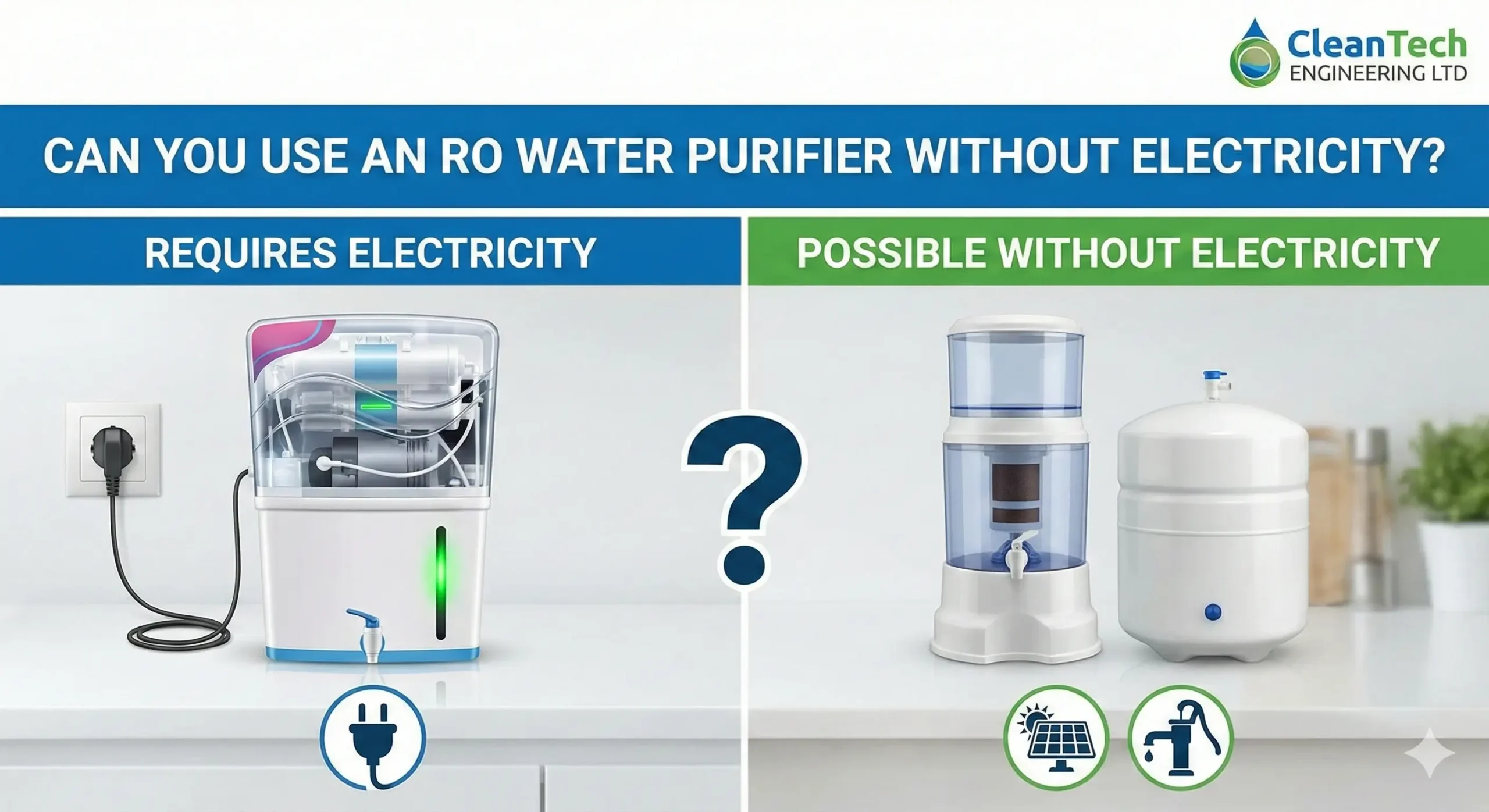
At CleanTech Engineering LTD, we often get asked whether it’s possible to use an RO water purifier without electricity. While most RO systems require power to function, there are a few exceptions and alternatives that can help you keep your water clean, even during power outages. In this post, we’ll dive into why most RO systems need electricity, explore alternatives that don’t, and offer some tips to make sure you can still enjoy clean water during power cuts.
Why RO Water Purifiers Usually Require Electricity
1. Pressure Requirement
Most RO water purifiers need electricity because they rely on pressure to filter out impurities. The RO membrane, which removes dissolved salts, heavy metals, and bacteria, needs significant pressure to force water through its tiny pores. Without this pressure, the system can’t effectively purify water, which is why most RO systems require a pump that runs on electricity.
2. Electric Components
Modern RO purifiers come with additional features like UV lamps for disinfection and digital indicators to monitor filter life or water quality. These features are powered by electricity, and without power, they can’t function. The UV lamp, for example, kills any remaining bacteria in the water, ensuring it’s safe to drink.
3. Booster Pumps
In places with low water pressure, a booster pump is necessary to maintain optimal pressure for the RO system. This pump is powered by electricity and helps the water pass through the RO membrane effectively. Without it, the purification process wouldn’t work efficiently, and the system might not deliver the clean water you expect.
Exceptions: Can You Use RO Water Purifiers Without Electricity?
While most RO systems need electricity to function, there are exceptions and alternatives you can use to ensure you still get clean water when the power is out.
1. Storage Tanks
Many modern RO purifiers, like the Pureit Revito Prime, come with storage tanks that store purified water. Even when the power goes out, you can still access the water that’s already been purified and stored in the tank. The only limitation is that you’ll eventually run out of stored water, but it’s a helpful backup solution.
- Benefit: You can still rely on purified water for a limited time during power cuts.
2. High-Pressure Systems
If your home has high natural water pressure (typically above 45 psi), you may be able to use certain under-sink RO systems without a booster pump. These systems are designed to function with natural pressure and don’t need electricity to operate.
- Example Models: Systems like the Glacier Fresh GFU03 and Apple Galaxy Non-Electric RO don’t require electricity to function, making them ideal for areas with reliable water pressure.
- Benefit: They work completely without electricity, providing an eco-friendly and low-maintenance option.
3. Gravity-Based Filters
While not technically RO systems, gravity-based filters are another option. These filters rely on gravity to pass water through sediment and carbon filters, eliminating large particles and contaminants. These systems don’t need electricity to function, making them a reliable alternative during power cuts.
- Example Models: Brands like Aquaguard or Tata Swach offer gravity-based filters that are popular in Bangladesh.
- Benefit: No electricity needed, eco-friendly, and budget-friendly.
How to Make RO Water Purifiers Work Without Electricity
Even if your RO system requires electricity, there are ways to keep it running during power outages:
1. Using an Inverter
Most RO systems use minimal power, typically around 25–60 watts, so they can be easily powered by an inverter during power cuts. Connecting your purifier to an inverter can keep it running smoothly without requiring a direct electricity supply.
- Tip: Look for affordable inverters that are designed to handle low-power appliances like RO purifiers. Many homes in Bangladesh already use inverters to keep their electronics running during power cuts.
2. Solar Solutions
A more sustainable solution is to connect your RO system to a solar inverter. Solar energy is a great way to power your RO system without relying on the grid, especially in areas with frequent power outages.
- Eco-Friendly Alternative: Solar panels reduce your reliance on non-renewable resources and can save you money on electricity bills in the long term.
3. Manual Methods
In emergencies, traditional water purification methods like boiling or using purification tablets can help ensure your water is safe to drink. However, these methods are not as efficient as an RO purifier and should only be used as a last resort.
- Tip: Boiling water is effective for killing bacteria, but it doesn’t remove other contaminants like heavy metals or salts. It’s a quick fix but not a permanent solution.
Comparison: RO Water Purifiers That Can Operate Without Electricity
If you’re looking for RO systems or alternatives that can operate without electricity, here are a few options:
| Model | Technology | Features | Price Estimate (BDT) |
| Pureit Revito Prime | RO + MF | Includes storage tank for water during outages | ৳16,500 – ৳19,500 |
| Glacier Fresh GFU03 | Non-Electric RO | Designed to function with natural water pressure | ৳12,000 – ৳14,000 |
| Apple Galaxy Non-Electric RO | Non-Electric RO | No electricity needed, works without pump | ৳10,000 – ৳12,500 |
| Gravity-Based Filters | Gravity + Carbon | No electricity, eco-friendly | ৳2,500 – ৳4,500 |
Pros and Cons: Using RO Water Purifiers Without Electricity
Pros:
- Cost Savings: With solar or inverter solutions, you can avoid high electricity bills and still have purified water.
- Eco-Friendly: Solar energy reduces your carbon footprint, and gravity filters are naturally energy-free.
- Convenience: Even during power outages, you can still access purified water from storage tanks or high-pressure systems.
Cons:
- Limited Water Availability: Storage tanks may not hold enough water for prolonged power cuts.
- Lower Filtration Efficiency: Non-electric RO systems or gravity filters may not offer the same high-level filtration as electric models.
- Initial Setup Cost: Solar and inverter solutions require a higher upfront investment.
Conclusion: Can You Use an RO Water Purifier Without Electricity?
While most standard RO systems require electricity, there are several alternatives and solutions available to keep your water purifier running during power cuts. You can rely on systems with storage tanks, high-pressure RO models, or gravity-based filters. Alternatively, using an inverter or solar energy can help you power your electric RO system without the need for grid electricity.
Call to Action: Looking for a reliable water purifier for your home? Explore the wide range of water purifiers available at CleanTech Engineering LTD. Visit our website for more information and to find the perfect solution for your family.
FAQs: Answering Common Questions About RO Purifiers Without Electricity
- Can I use an RO purifier without power?
- Yes, some models have storage tanks, and high-pressure systems can work without electricity. You can also use solar or inverters to run electric models during power cuts.
- Do I need an inverter for my RO purifier?
- If you live in an area with frequent power cuts, using an inverter can help keep your RO purifier running.
- Are gravity-based filters effective for water purification?
- While not as advanced as RO, gravity-based filters can still purify water to remove larger particles and contaminants, making them a good option in emergencies.
