

 Industrial Water Plant



How Does Water Treatment Work?

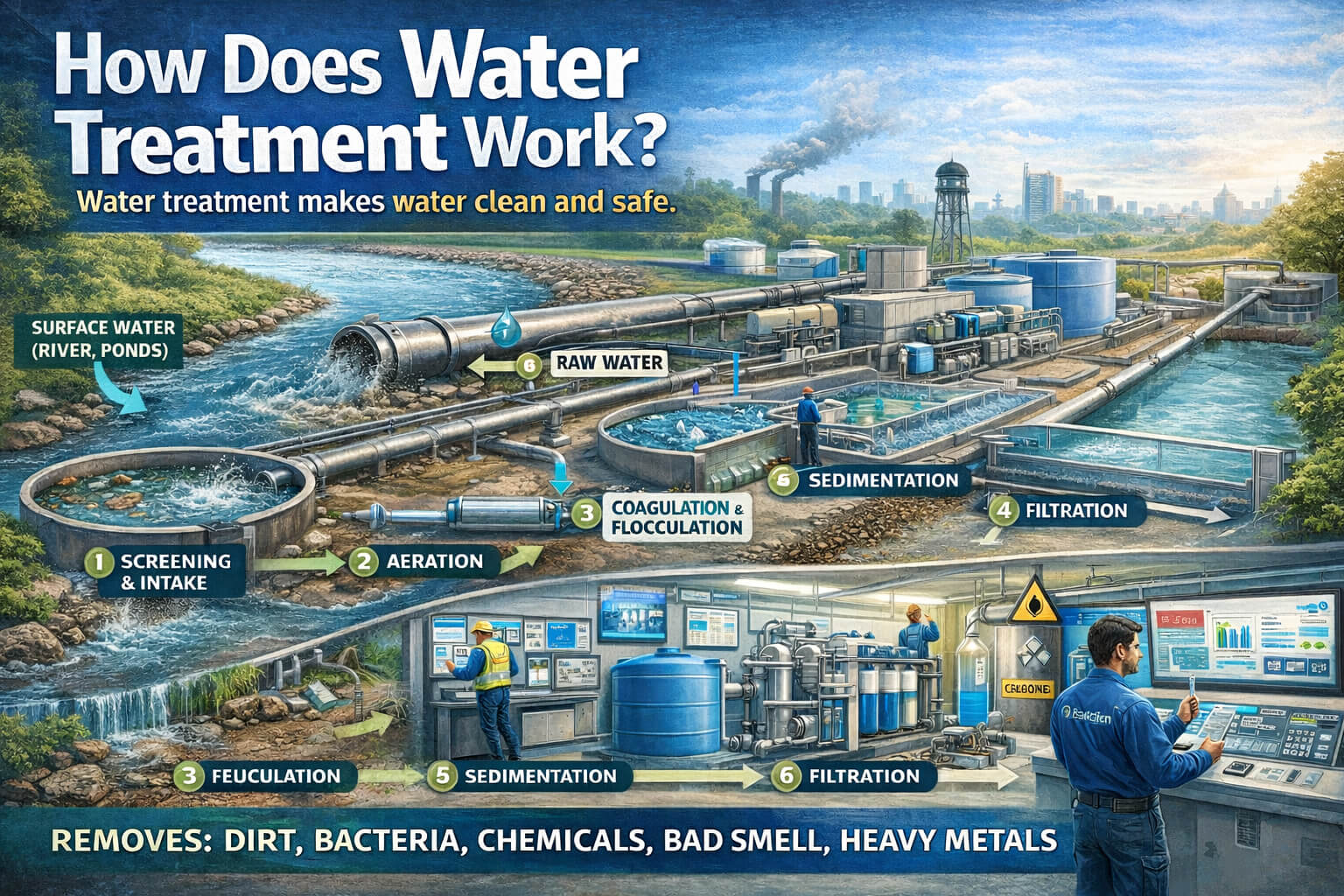
Water treatment is the process of making water clean, safe, and ready to use.
At CleanTech Engineering LTD, we treat water to remove harmful substances so it’s safe for homes, factories, and even drinking. Untreated water can carry dirt, bacteria, chemicals, heavy metals, and bad smells. If not cleaned, this water can make people sick, damage machines, and harm the environment.
We provide water treatment for homes, industries, hospitals, offices, and community water systems all over Bangladesh. Whether it’s river water, groundwater, or water from a local supply, proper treatment can make it safe to use.
What Is Water Treatment?
Water treatment means cleaning water to remove contaminants and make it fit for drinking or other uses.
Raw water is what we get directly from nature—like rivers, ponds, wells, or underground sources. It often contains dust, bacteria, bad smell, chemicals, and small particles. Treated water is clean, clear, and safe for use.
We get water from two main sources:
- Surface water: Like rivers, lakes, and ponds.
- Groundwater: From deep tube wells or aquifers underground.
Different water sources need different treatment methods. For example, river water has more floating dirt and bacteria, while groundwater might contain iron or arsenic.
Overview of the Water Treatment Process
Water treatment isn’t done in one step—it goes through a series of stages. Each step removes a specific type of contaminant, like sand, germs, odor, and harmful metals.
There are three main methods of removing contaminants:
- Physical methods: Such as filtering out particles.
- Chemical methods: Like adding chlorine or coagulants.
- Biological methods: Killing bacteria and viruses.
These steps are carefully planned to make sure the water meets health and safety standards.
Step-by-Step: How Water Treatment Works
Here’s a breakdown of how we treat water step by step:
Step 1: Screening and Intake
We start by removing large things like leaves, plastics, or sticks that flow in with the water. This protects the machines used in the next steps.
Step 2: Aeration
We add air to the water. This helps remove bad smells, gases like hydrogen sulfide, and oxidizes metals like iron and manganese. It makes the water breathe, just like opening a window in a stuffy room.
Step 3: Coagulation
We add chemicals like aluminum sulfate to the water. These chemicals help tiny dirt particles bind together into bigger pieces.
Step 4: Flocculation
Next, we gently mix the water. This makes the small particles join and form larger clumps called flocs.
Step 5: Sedimentation
We stop stirring and let gravity do its work. The flocs sink to the bottom, and clean water stays on top. The collected sludge is safely removed later.
Step 6: Filtration
Now we filter the water through layers of sand, gravel, and activated carbon. This removes whatever small particles are left, and also improves taste and smell.
Step 7: Disinfection
This is one of the most important steps. We kill bacteria, viruses, and harmful germs by adding chlorine, using UV light, or applying ozone. This makes water safe to drink.
Step 8: pH Adjustment and Final Conditioning
We check and balance the pH of water to protect metal pipes from corrosion. Sometimes we add minerals to make the water better for health or to meet government standards.
Step 9: Storage and Distribution
Finally, clean water is stored in tanks and sent through a pipe system. Our system constantly checks the water quality until it reaches your tap or business.
Water Treatment Plant Process Explained
At CleanTech, we use modern, automated systems to make sure every step runs smoothly. Our engineers and operators regularly monitor the system, adjust chemical levels, and make sure everything follows Bangladesh’s environmental and health regulations.
Every treatment plant we build or maintain is built to deliver safe, reliable water to our clients.
Variations in Water Treatment Methods
Based on Water Source
Surface water often needs more cleaning for bacteria and floating dirt. Groundwater usually has iron, arsenic, or heavy metals that need chemical removal.
Advanced Treatment Technologies
For clients needing extra-clean water (like in pharmaceuticals or food processing), we also use:
- Reverse Osmosis (RO)
- UV disinfection
- Ozonation
- Activated carbon filters
Drinking Water vs Wastewater Treatment
Drinking water is treated to make it safe for human use, while wastewater treatment is done to remove harmful waste before releasing it to the environment. They are separate but equally important.
Importance of Water Treatment
Without proper water treatment:
- People can get sick from waterborne diseases like diarrhea, cholera, and typhoid.
- Factories can experience equipment damage.
- Nature can suffer from polluted water being released.
Water treatment also helps extend the life of water pipes and reduce damage to infrastructure.
Common Contaminants Removed During Water Treatment
We remove:
- Sediments (sand, dust, mud)
- Bacteria and viruses
- Heavy metals (iron, lead, arsenic)
- Organic compounds (pesticides, oils)
- Bad odors and taste
Our systems are built to handle the specific problems found in your water supply.
How Professional Water Treatment Services Add Value
As a professional service provider, here’s how we add value:
- We do water testing to choose the best treatment method.
- We custom-design systems for your needs (home, hospital, factory).
- We provide maintenance and regular monitoring.
- We make sure your water meets both Bangladesh standards and international health codes.
Choosing the Right Water Treatment Solution
Every client needs a different solution based on:
- Where the water comes from
- What it will be used for
- What’s in the water
- How much clean water is needed daily
We advise our clients after doing proper testing, and then offer both technical and cost-effective options. This helps you get the best results for the long term.
Frequently Asked Questions About Water Treatment
Q: How long does water treatment take?
A: Most systems treat water in minutes or hours, depending on the method. But setup and design can take a few days or week,s depending on the size.
Q: Is treated water always safe to drink?
A: Yes—if properly treated and regularly monitored, it is safe to drink and use.
Q: How often should water treatment systems be serviced?
A: We recommend a monthly check-up and a full service every 3–6 months based on usage.
Q: Can all contaminants be removed by treatment?
A: Almost all, yes—if the right system is used. Some advanced contaminants need special methods like RO or UV.
Conclusion
So, how does water treatment work?
It works through a series of well-planned steps—starting from removing large debris to final disinfection and pH balancing. Each stage targets a specific risk and prepares the water for safe use.
At CleanTech Engineering LTD, we take water safety seriously. We use modern technology and skilled engineers to deliver safe, clean, and reliable water to homes, businesses, and industries across Bangladesh.
If you’re looking for an expert in water purification and treatment, we’re here to help.
Visit us at www.cleantech.com.bd or call us to discuss your water needs.
